


Night starts to feel like night again.
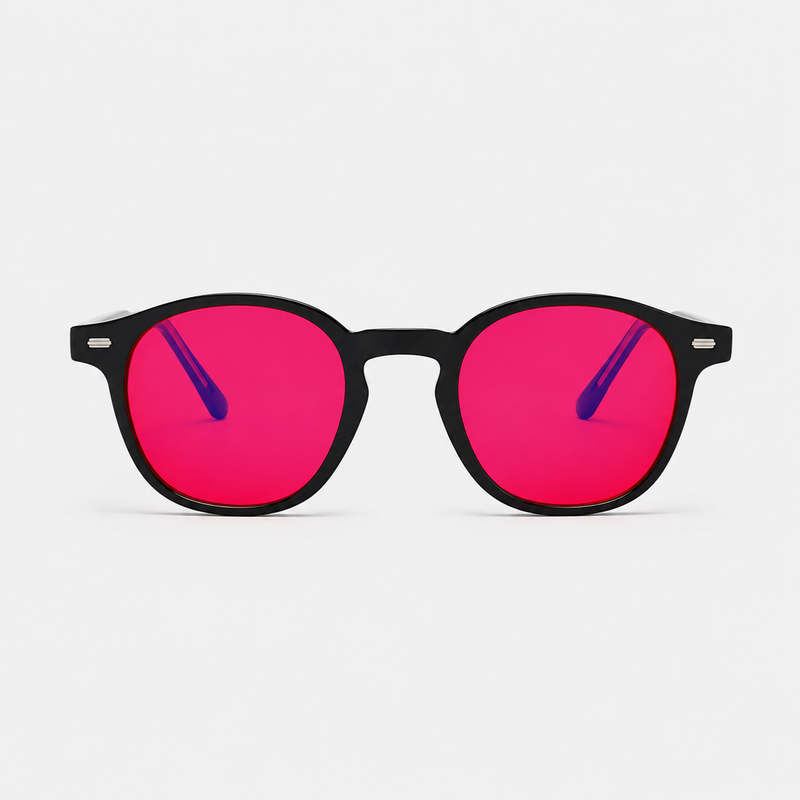
Deep red, the deepest filter Ryva makes. It blocks nearly all blue and part of green: the optical equivalent of candlelight.
of blue filtered
Plus part of the green, which also feeds your body clock.
that can delay melatonin
According to studies on reading on devices before bed, after several hours of bright screen.
of visible light passes
Indoor use only: it is the tint that changes what you see the most.
Laboratory spectral transmission measurements on the same lenses we ship.
Your body can't tell a screen from the sun.
For nearly all of history, night meant firelight and candles: warm, dim light. Today you have screens with the intensity of noon. Here is how your biology reacts.
A screen at 11pm, to your retina
The retinal cells that measure light cannot tell where it comes from: they only react to wavelength. A phone at night sends a signal similar to the midday sun.
Peak sensitivity ≈ 480nmThe wrong signal at the wrong hour
Your internal clock sets the day by the light it receives. If at night it gets noon-like light, it gets confused: the feeling of being exhausted and wired at once.
Key band ≈ 415 to 530nmThe sleep hormone
Bright blue light in the hours before bed can delay its release. Filtering that band at night helps the sleep signal arrive on time.
Up to ~1.5h of delayAlertness that should be easing off
Its daily cycle starts high in the morning and drops toward night. Bright light at the wrong hour can interfere with that natural descent.
Natural daily cycleWhat red cuts. Beyond all the blue.
The dark zone covers the full blue and fades into the green: that is why it is the deepest. Figures come from laboratory spectral transmission measurements on our lenses.
Nearly all blue and part of the green. UV400. Indoor use only.
See it for yourself.
Move the slider to compare a bare screen with a screen seen through red. It is an illustration: the real tone depends on your display.
Three tints, three moments of the day.
How much blue is worth filtering changes with the hour. That is why there is no single lens: there is a ladder.
Dawn · AURORA
The gentlest filter. Cuts blue-violet without darkening your view.
Dusk · OCASO
The middle filter. Covers nearly all blue, including your body clock's peak.
Moon · LUNA
The deepest filter. Nearly all blue and part of green: candlelight.
A candle, not a noon sun.
Red is the last step: for the hours before bed, when your body needs the clearest possible night signal.
Not all blue-light glasses are alike.
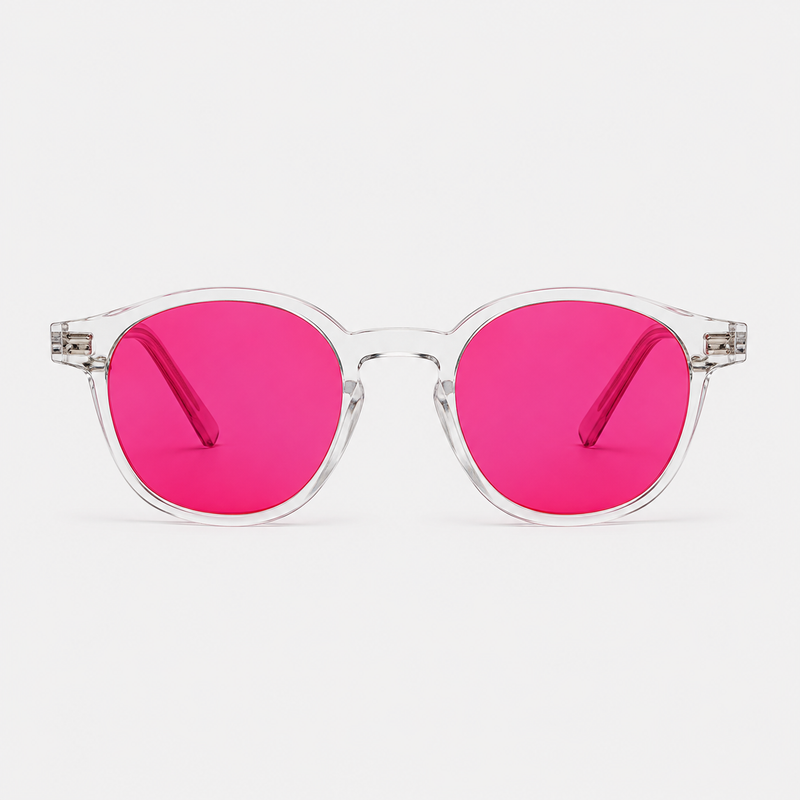
The red lenses.
Prices and availability update automatically with the store.

The science, explained simply.
When do I wear the red lens?
In the hours before bed, indoors only. It is the deepest filter: the clearest night signal.
Why is the color so intense?
Because it filters nearly all blue and part of green. That notably changes color perception, and it is exactly why it is recommended only indoors before bed.
Will it help me sleep?
Filtering blue light at night is a complement, not a substitute for good habits: less screen before bed, consistent schedules and natural light during the day. Effects vary from person to person.
Can I drive or use it as sunglasses?
No. Never. It is an indoor lens and changes color perception a lot, so it is unsuitable for driving. It is not certified as sunglasses.
Where do the percentages come from?
From laboratory reports with spectral transmission curves measured on samples of our lenses. We publish the figures as they come out, along with each tint's light transmission, so you can also see how much visible light it lets through.
Important note
Ryva lenses are a general-use optical product with a blue light filter. They are not a medical device: they do not diagnose, treat, cure or prevent any illness or sleep disorder, and they are not a substitute for consulting an eye care professional.
The percentages published on this page come from spectral transmission measurements taken in a laboratory on samples of our lenses, and describe the optical behavior of the filter, not a guaranteed clinical outcome. The information on light, circadian rhythm and hormones is offered for general education and reflects the broad state of research in the field; effects vary from person to person. If you have persistent visual discomfort or sleep problems, consult a health professional.
Our lenses are not certified as sunglasses or for use while driving.
Give your body the right signal.
Pick your pair and give every hour of the day the light it deserves.